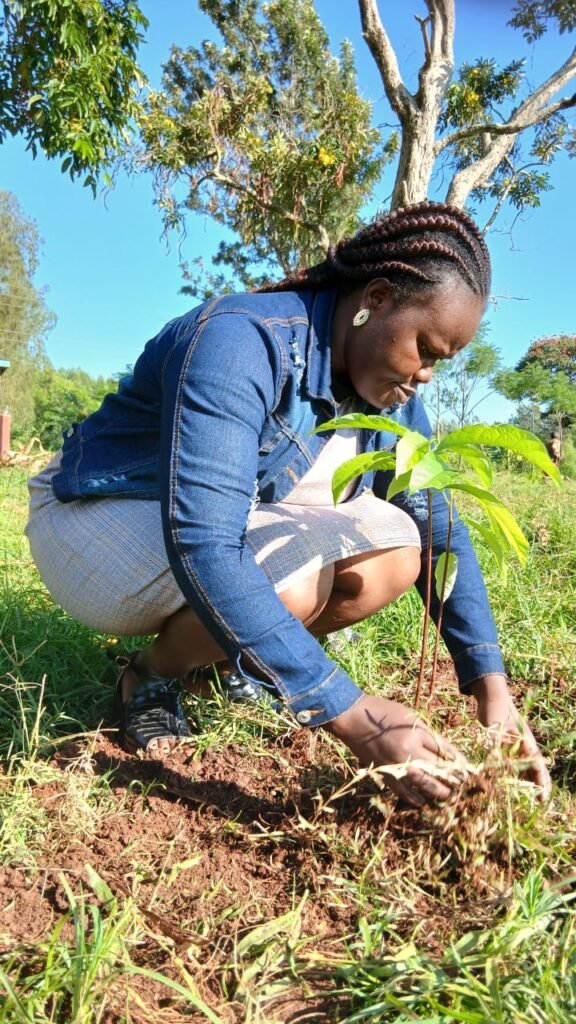
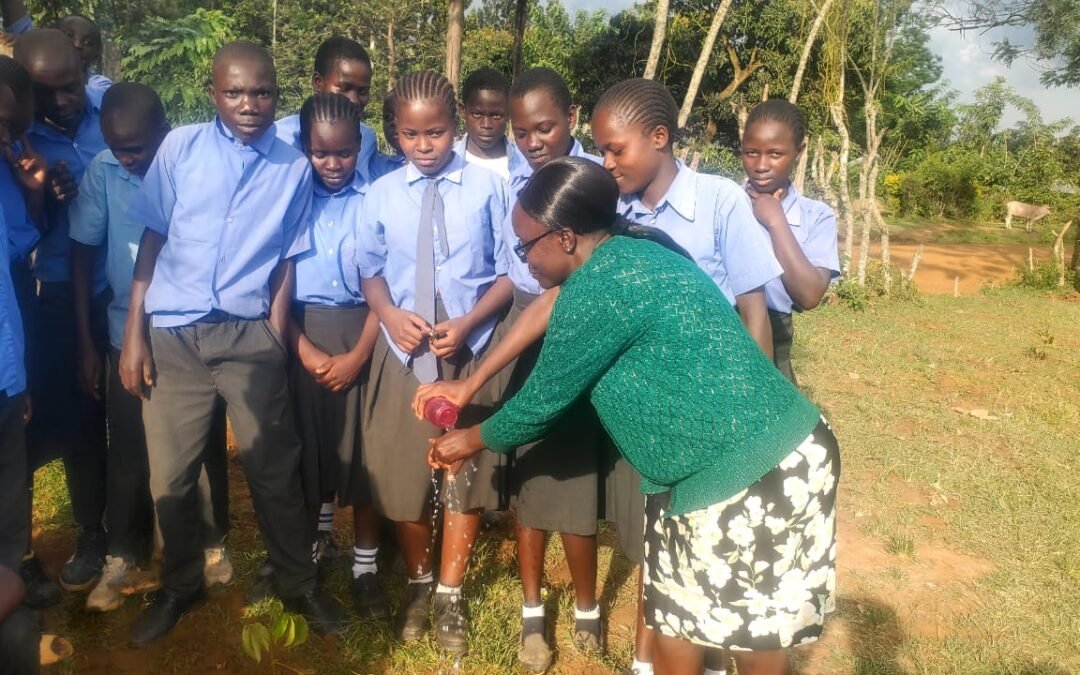
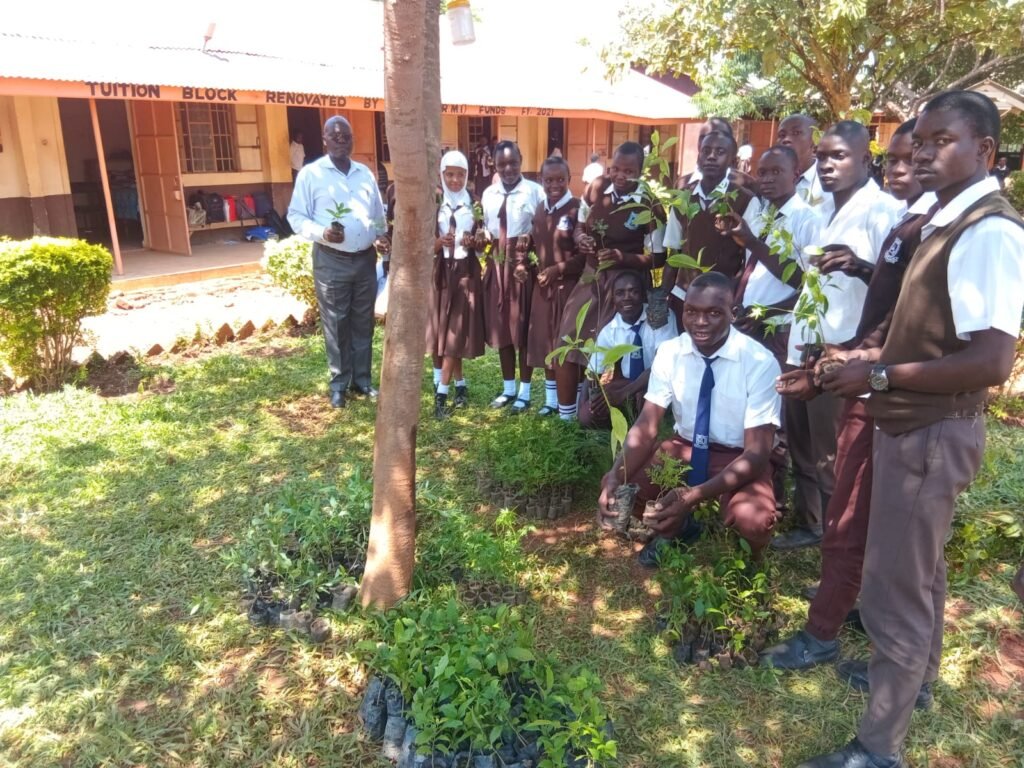
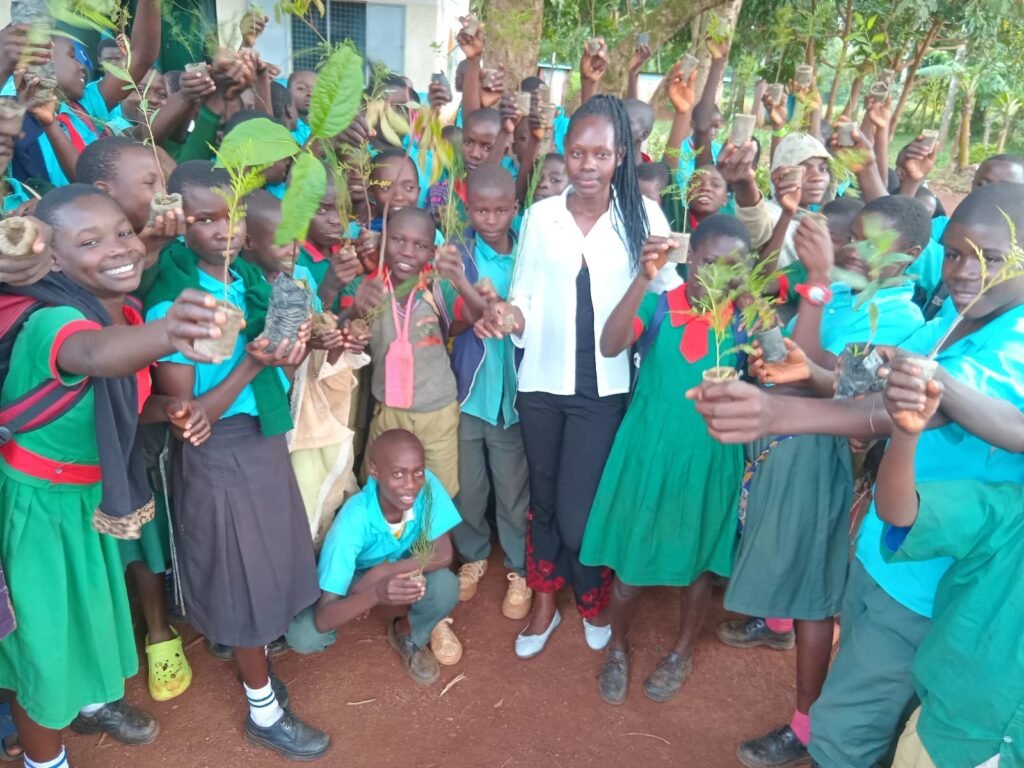
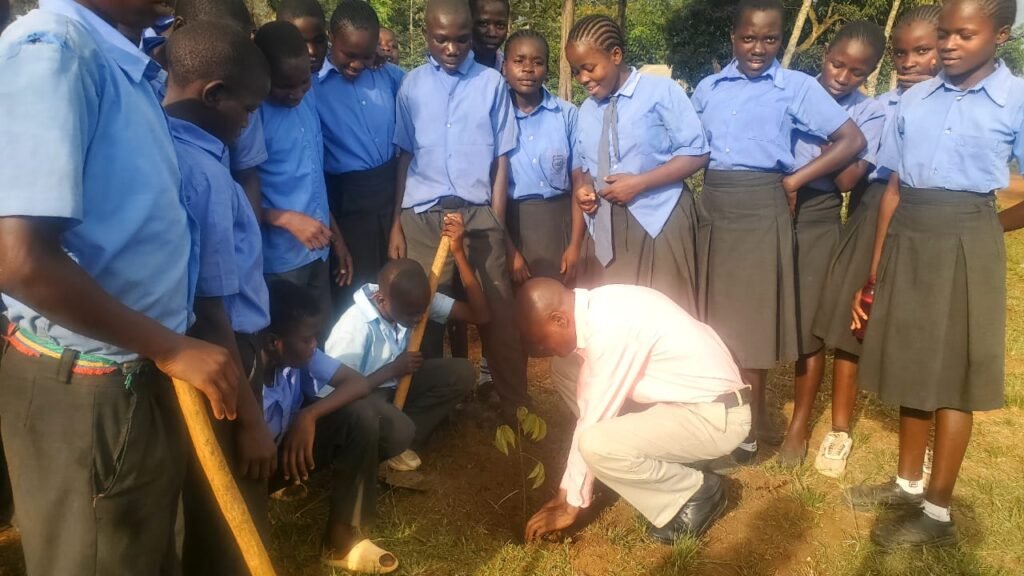
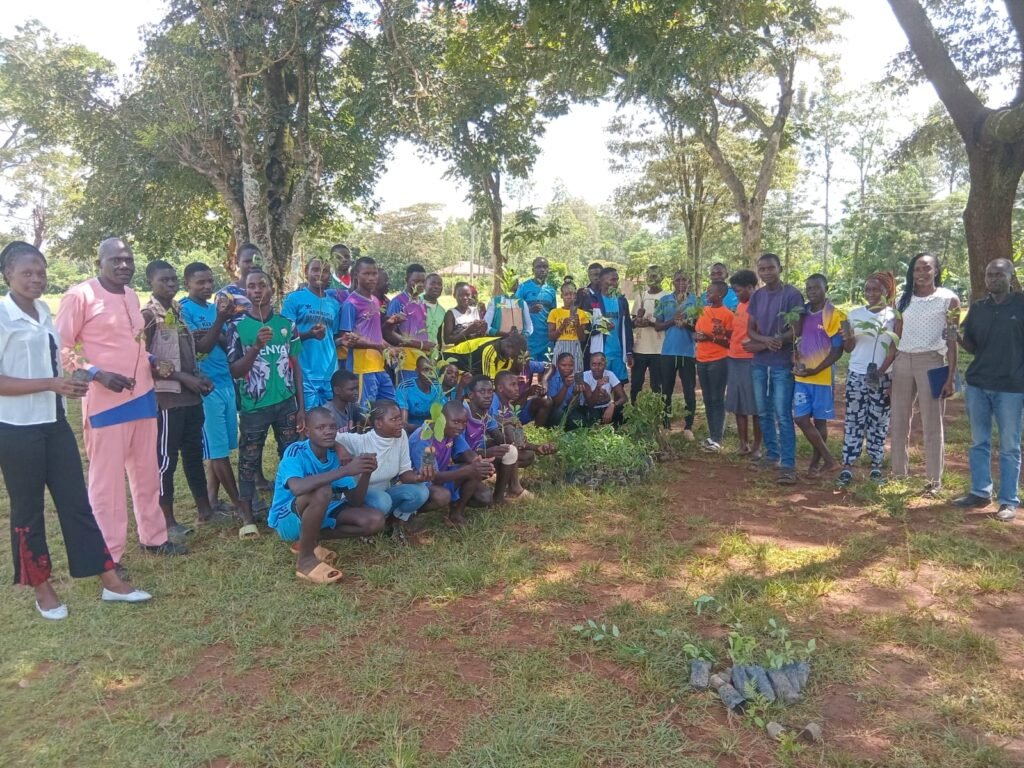
Wajibika Centre for Rural Development, a Public Benefit Organisation operating in Busia County, is dedicated to addressing critical issues in Climate Change, Agriculture, Education, and Water. With operations across four sub-counties—Busia, Bunyala, Teso South, and Butula—Wajibika strives to promote sustainable rural development through community empowerment and environmental stewardship. In line with its mission, Wajibika partnered with Equity Bank to commemorate Mazingira Day on 10th October 2025 by donating and distributing 9,300 tree seedlings to 23 schools within Matayos Sub-County. This initiative aimed at promoting environmental conservation, enhancing climate change mitigation efforts, and nurturing a culture of environmental responsibility among students and the wider community.
Mazingira Day, celebrated annually on October 10th, is a national environmental awareness day in Kenya. It supports the government’s ambitious 15-billion tree growing programme, targeting 30% tree cover by 2030. The day serves as a platform for community participation in environmental activities, particularly tree planting, which plays a critical role in tackling the climate crisis.
Objectives of the Initiative
• Environmental Conservation: Promote environmental stewardship and responsibility among students and communities.
• Climate Change Mitigation: Enhance tree cover to absorb carbon dioxide, improve air quality, reduce soil erosion, and minimize flooding risks.
• Education & Awareness: Sensitize learners on the importance of trees and environmental care.
• Community Involvement: Foster community participation and cohesion through collective environmental actions.
Seedling Distribution Summary
Tree seedlings were distributed to the following 23 institutions:
| No. | SCHOOL / INSTITUTION | No. of seedlings |
| 1 | Matayos Vocational Training Centre | 400 |
| 2 | Stansylynk Academy | 500 |
| 3 | Lwanya Primary and Junior school | 400 |
| 4 | Bulanda Primary and Junior school | 400 |
| 5 | Mundulusia Primary and Junior school | 400 |
| 6 | Indoli Primary and Junior school | 500 |
| 7 | Siteko Mixed Primary and Junior school | 400 |
| 8 | Budokomi Primary and Junior school | 400 |
| 9 | St. Paul's Buderie Primary and Junior school | 500 |
| 10 | St. Andrews Mundulusia Primary and Junior school | 500 |
| 11 | St. Stephens Lwanya Girls High School | 700 |
| 12 | Mundika Nafaka Farmers | 400 |
| 13 | Busidibu Special School | 500 |
| 14 | St. John Mabale Secondary School | 500 |
| 15 | St. Paul Busende Secondary school | 500 |
| 16 | Nang'oma Primary and Junior school | 400 |
| 17 | Lukonyi Boys Primary and Junior school | 400 |
| 18 | Busia Vocational Training Centre | 300 |
| 19 | Nasira Vocational Training Centre | 300 |
| 20 | St. Albert Bukalama Primary and Junior school | 250 |
| 21 | Buyama Primary and Junior school | 200 |
| 22 | St. Mary’s Primary and Junior school | 250 |
| 23 | Mabale Primary and Junior school | 200 |
| TOTAL | 9,300 |
Challenges Faced
Despite the success of the initiative, several challenges were encountered:
• Lack of cooperation from a few teachers, affecting coordination during planting activities.
• Insufficient watering equipment such as watering cans and pipes in some schools.
• Limited planting space in a few schools, hindering the planting of more seedlings.
• Lack of security for the planted trees due to unfenced school compounds.
Conclusion
The tree planting initiative spearheaded by Wajibika Centre for Rural Development in collaboration with Equity Bank is a commendable step toward achieving environmental sustainability and resilience in rural Kenya. It directly contributes to national efforts of increasing tree cover and instills a culture of environmental responsibility among young learners. This event not only supported immediate environmental action but also laid a strong foundation for long-term conservation and climate adaptation strategies in Busia County.
Recommendations
To build on the success of this initiative, the following recommendations are proposed:
• Provision of essential tools such as watering cans, hoes, and pipes to facilitate proper care and maintenance of the seedlings.
• Expansion of tree planting activities to include more schools across all sub-counties in Busia County.
• Monitoring and Evaluation: Establish systems to monitor the survival rate of the seedlings and provide training to environmental club members on care and maintenance.
• Improve security by encouraging the fencing of school compounds to protect the growing trees from destruction by stray animals or unauthorized access.